Loading…
Loading…Capability · Operations
Growth Operations
Most agencies stop at launch. This is the work that starts there.
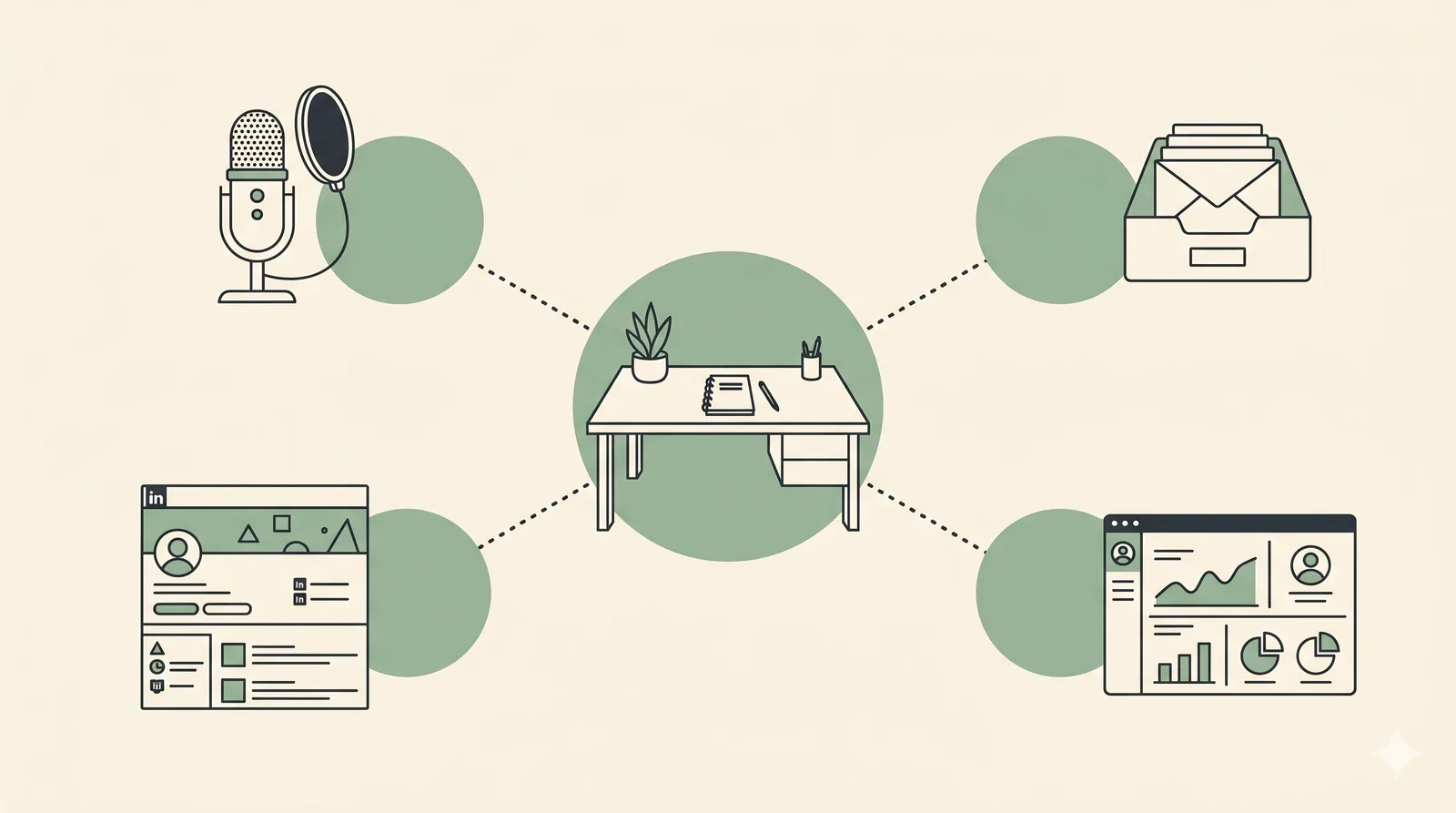
The layer that runs after a platform ships: analytics flowing in daily, a monthly optimisation cadence, automation of the work that eats your team's week, senior technology leadership on a fractional basis, and the AI skills your people need to do their own jobs better.
Why this capability exists
A platform is finished on the day it ships and starts decaying the day after. Traffic sources shift, a competitor changes their offer, a workflow that made sense for a handful of customers breaks quietly once the business is much larger, and nobody notices until someone asks why growth has stalled. Most agencies hand over the keys at launch and consider the job done, which leaves a gap exactly where a business needs attention most: the months when small decisions, made or missed, compound into either momentum or drift. Ownership of that gap tends to fall on whoever is already busiest, which usually means it falls on nobody. We built this capability because the work of noticing what changed and acting on it needs an owner with the time and the data to do it properly, month after month.
Every platform needs someone assigned to notice what changed this month.
What we believe about it
We believe in daily data over quarterly reviews. A quarterly review tells you what already happened and rarely why; a daily dashboard shows the shift while there is still time to act on it, and that difference in timing is most of the value. We also believe in implementing the change ourselves, rather than handing over a slide deck and a recommendation someone else has to find the time to build. A recommendation nobody acts on is worth exactly nothing, however well argued.
We put automation to work freeing people for judgement. We build systems that watch traffic, flag anomalies and handle the repetitive parts of a workflow, so your team spends its attention on the decisions only a person can make. You get the answer faster; you still make the call.
How the engagements fit together
You usually start with observability, because everything after it depends on trustworthy daily data. The monthly cadence follows naturally once that foundation is in place. We add automation, leadership or training only where a business genuinely needs that capability.
- 01
Start with observability, so decisions come from data flowing in every day
- 02
Move into the monthly cadence once the baseline is stable and trustworthy
- 03
Add process and workflow automation where the team is spending hours on repeatable work
- 04
Bring in fractional leadership or AI skills training as the business needs that capability
Some clients run observability and the monthly cadence indefinitely and never need anything more. You might add automation within the first few months, once the case for it is obvious from the data. Either way, the cadence is the constant: a platform nobody is watching starts drifting again the moment attention moves elsewhere, no matter how carefully it was built at launch.
Engagements
Continuous


Questions
Is this a retainer for maintenance?
No — maintenance keeps a platform from breaking, while this makes it better every month, with a written record of what changed and why. The monthly summary is dated and specific enough to hand to a board or a new hire. It continues for as long as it keeps producing decisions worth making.
How much of our time does it take?
Most months, it takes one working session with your team and decisions when they come up between sessions. We run the analysis and prepare the recommendation beforehand, so the session itself is short and focused on choices. Outside that session, the time cost to your team stays close to nothing.
Can you lead our technology without being full-time?
Yes, you get a named person, a fixed number of days each month, and a plan for handing leadership back to your own team when you are ready. It is technology leadership sized to what the business needs right now, without a full-time seat on the payroll. The days are fixed so both sides know what to expect.
