Loading…
Loading…Digital Marketing · Retainer
Social Media Management
Channels that post on schedule, sound like you, and report what they produced.
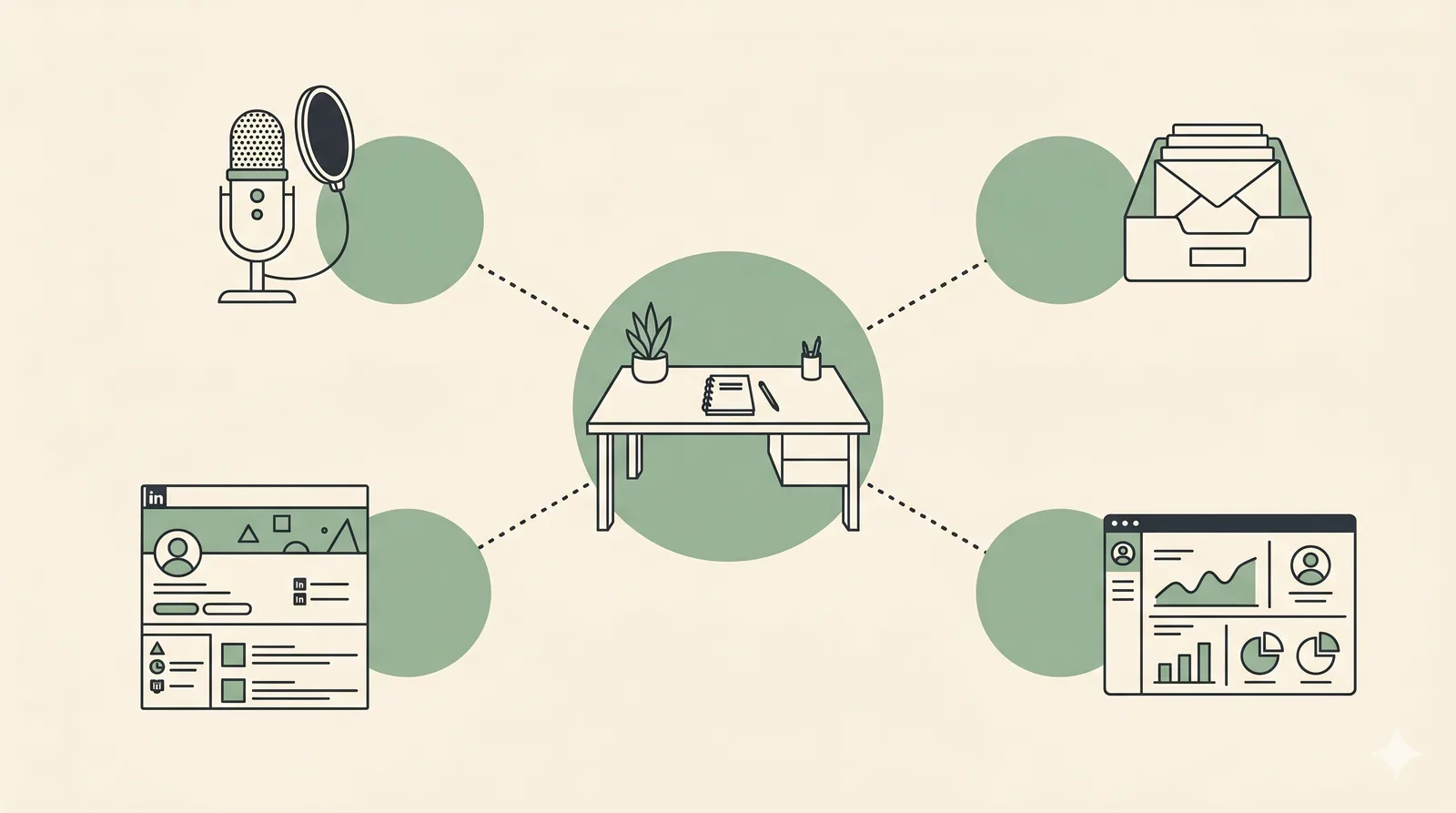
Social channels run as a system: a monthly calendar built from your content and data, posts drafted and scheduled by the pipeline, a person approving and replying, and a report that ties activity to enquiries. For operators who want presence without a daily chore.
Discuss this engagementWho this is for
- Hospitality, wellness and service businesses whose customers find them on social
- Founders posting inconsistently
- Teams with a designer and no operator
The situation
Posting happens when someone remembers to post. A good week produces three pieces of content and a quiet one produces none, and the gap between them tracks whoever on the team currently has a spare afternoon rather than anything the audience actually needs. Hospitality, wellness and service businesses feel this most, because their customers are already looking on social before they ever reach the website.
Many teams already have a designer making things look right and nobody turning that into a schedule that holds. A comment sits unanswered for two days because nobody owns replying. Nobody can say afterward whether any of it produced an enquiry, because the posts and the enquiry log have never been looked at together. Presence exists, sporadically, and nobody is quite responsible for whether it works.
What changes
A monthly calendar replaces the guess about what goes out this week. We build it from your content, your brand assets and your own data on what has worked before, then draft and schedule against it so the pipeline handles the routine parts and a person handles judgment.
A channel that posts on a schedule starts sounding like a business that is actually there.
You approve the month in one sitting rather than a post at a time, and replies happen inside hours you set, with anything sensitive routed to you directly. A monthly report closes the loop by tying posts back to the enquiries that followed them, so presence stops being a feeling and becomes something you can point to.
How it runs
We start by auditing what exists and cutting the channels that are not earning their place. A business rarely needs to be everywhere; it needs to be reliably somewhere your buyers already look.
- 01
Audit channels and choose the ones that matter
- 02
Build the calendar and the drafting pipeline
- 03
Approve, schedule, reply
- 04
Report monthly
Once the calendar is running, drafts arrive on their own schedule for your monthly approval session, and scheduling happens automatically once you have signed off. Replies follow the policy you set, with anything outside it held for you rather than answered on your behalf. The report at month's end shows what ran and what it produced, which becomes the input for next month's calendar.
What you receive
You receive the monthly calendar itself, built from your content and your own performance data, and the drafting and scheduling pipeline that keeps it running day to day. Alongside them, the reply handling inside the hours you set, with anything sensitive escalated straight to you.
You also receive the monthly report tying activity to the enquiries it produced, plus the growing library of captions and creative assets built up as the calendar runs. If any posts in the calendar are boosted or promoted, that spend stays in your own ad accounts and is never part of our fee.
The engagement
- Format
- Monthly calendar, drafting and scheduling pipeline, community replies within agreed hours, monthly report
- Duration
- Monthly
- Typical range
- Engagements in this shape typically run $750 to $2,500 a month.
- What we need from you
- Channel access and brand assets
- A monthly approval session
- A reply policy for comments and messages


More in Digital Marketing
- RetainerContent CreationA publishing cadence that holds, in a voice that is unmistakably yours.Monthly
- ProgrammePerformance MarketingPaid media run as a measured system, with every spend decision grounded in yesterday's data.Two weeks
- BuildAgentic Marketing SystemMarketing that knows more every week: data in daily, drafts and flags by system, decisions by you.Three to six weeks
- AssessmentAnswer Engine OptimisationKnow how AI assistants describe you today, and what to change so they cite you tomorrow.One week
Questions
Which channels?
We run the two or three channels where your buyers actually are, chosen from your data. A channel earns a place on the calendar; it does not get added by default.
Do you reply to comments?
We reply within the hours you agree and the rules you set. Anything sensitive is routed straight to you.
How much do you post?
We agree a cadence monthly and hold it, valuing consistency over volume. A quiet week with three good posts beats a noisy one with ten forgettable ones.
Can this run with paid campaigns?
Yes. Organic and paid share the same calendar and the same report, so a promoted post and an organic one are planned together as one effort.
