Loading…
Loading…AI Innovation
How to Build an AI-Native Company: The Operating Model
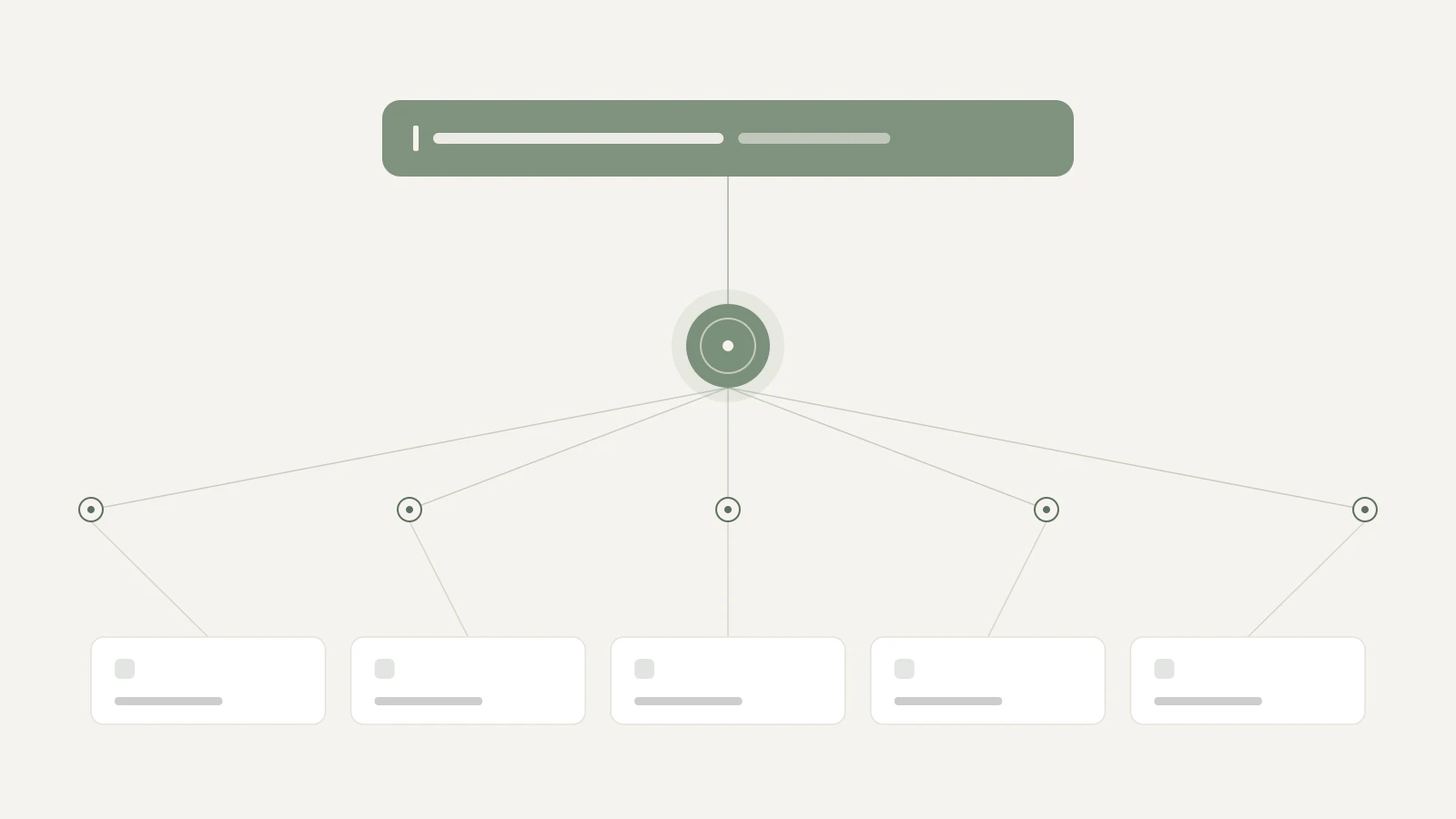
An AI-native company is not a normal company with AI tools added. It is an operating model where objectives, context, systems, agents, and human judgment are designed as one execution layer.
Avishek Kedia
Founder & CEO, Airful
Most companies are still approaching AI from the wrong end of the problem. They ask which tool to buy, which chatbot to add, or which employee workflows to automate first.
Those questions are useful, but they are downstream. The better question is: what would this company look like if intelligence was part of the operating model from day one?
That is the real definition of an AI-native company. It is not a company with a few AI features bolted onto old processes. It is a company where objectives, data, knowledge, software systems, agent workflows, and human judgment are designed to work together.
We have felt this most clearly in the work that stops fitting into a single label. The Universe Club Platform is part product, part network, part relationship operating system. Investor Intelligence is not just a dashboard; it is a research, scoring, enrichment, and handoff layer. Le Roma CRM started from a very human hospitality problem: make sales, bookings, follow-up, and reporting understandable enough for a team to actually run.
That is where AI-native company building becomes practical. You are not trying to impress people with AI. You are trying to make the company easier to operate.
Quick answer
An AI-native company is an organization designed around intelligent execution.
Instead of asking people to move work manually between tools, the company connects its systems of record, knowledge base, business rules, and AI agents into an operating layer. Humans set direction, define constraints, approve sensitive decisions, and handle judgment-heavy work. AI handles research, routing, synthesis, drafting, enrichment, monitoring, and repeatable execution.
The point is not "more AI." The point is a better company architecture.
AI-native is an operating model, not a software category
Most AI adoption starts as tool adoption. Sales gets a prospecting assistant. Marketing gets a content generator. Support gets a summarizer. Leadership gets meeting notes.
That is AI-assisted work. It can save time, and it often does. But it rarely changes the structure of the company because the underlying workflow is still human-operated. A person still decides what happens next, opens another application, moves the information, updates the system, and follows up.
An AI-native company starts one level higher. It asks how work should flow if software can reason, act, and coordinate across systems.
We wrote about this as an AI Operating System: a layer that lets software operate on behalf of people instead of waiting for people to operate it. This article is the practical version. If you are building an AI-native company, what actually has to exist?
The answer is usually less shiny than people expect. It is better records, cleaner handoffs, a sharper operating language, and a few narrow workflows that do the boring work reliably.
The six layers of an AI-native company
Every AI-native operating model has six layers. You can make them simple at first, but you cannot skip them.
1. Objectives
AI-native work starts with objectives, not tasks.
Traditional software is task-shaped: create a record, update a field, send a message, export a report. AI-native work is outcome-shaped: qualify this account, prepare this renewal plan, investigate this churn signal, turn this discovery call into a scoped proposal.
That shift matters because agents need context and goals, not just button clicks. If the business cannot define the objective clearly, AI will only accelerate confusion.
A good objective includes:
- The business outcome.
- The source systems involved.
- The acceptable actions.
- The decision points that require human approval.
- The success measure.
"Summarize meetings" is a task. "Turn qualified discovery calls into CRM updates, project notes, proposal drafts, and follow-up messages within one business day" is an operating objective.
2. Systems of record
AI cannot run a company whose source of truth is scattered across Slack, spreadsheets, Notion pages, stale CRM fields, and people's heads.
The first hard requirement of AI-native work is source-of-truth discipline. The company needs to know where customer truth lives, where product truth lives, where financial truth lives, where content truth lives, and which system wins when records disagree.
This is where a lot of AI projects fail. The model is not the bottleneck. The bottleneck is that the company has no reliable operational substrate.
If your CRM is a suggestion box, your project management system is optional, and your internal docs are out of date, AI will expose that mess faster than a human team would. Before you orchestrate agents, clean up the records those agents will depend on.
This is why our work often starts before the AI layer. In the Alistair Langer case study, the important move was not a model prompt. It was consolidating email, documentation, podcast workflows, outreach, and CRM into a coherent operating base. In the Le Roma Gardenia case study, the unlock was turning scattered hospitality operations into a booking and follow-up system that non-technical staff could trust.
Those examples matter because AI-native companies need something solid to stand on. The agent cannot become the source of truth. It has to read from one.
3. Knowledge layer
Systems of record hold structured truth. The knowledge layer holds business context.
This includes positioning, customer profiles, pricing rules, sales methodology, onboarding playbooks, support policies, implementation notes, product decisions, competitive intelligence, and examples of good work.
The knowledge layer is what makes AI useful beyond generic text generation. Without it, the model sounds competent but does not understand the company. With it, the system can reason from the same operating context your best employees use.
The practical move is to treat knowledge as product infrastructure. It needs ownership, versioning, freshness rules, and retrieval boundaries. A folder full of random docs is not a knowledge layer. It is raw material.
4. Agent workflows
Agents should be narrow before they are broad.
The most reliable AI-native workflows are composed of specialized agents with clear jobs: one researches, one enriches, one drafts, one checks policy, one updates the CRM, one prepares a human approval packet.
That shape is more dependable than asking one general-purpose agent to "handle sales ops." It also makes the system easier to debug. When an output is wrong, you can see whether the problem came from missing context, bad retrieval, weak instructions, poor tool access, or an approval rule that was too loose.
The underlying connective tissue is increasingly standardized. Protocols like MCP make it easier for agents to interact with business tools without brittle one-off integrations, which is why we see MCP becoming a practical foundation for AI integration.
You can see the shape in the portfolio. Geoship Radar and Investor Intelligence both turn relationship research into structured review workflows. The useful part is not that an agent can draft a sentence. It is that research, enrichment, scoring, review, and handoff can live in one operating surface instead of six tabs and a spreadsheet.
5. Human decision rights
AI-native does not mean autonomous by default.
The best operating models are explicit about which decisions AI can execute, which decisions AI can recommend, and which decisions always require a human. This is not just a compliance concern. It is how you keep trust inside the company.
For example:
- AI can enrich a lead record automatically.
- AI can draft an outbound sequence for approval.
- AI can recommend a renewal-risk response.
- AI cannot discount a contract, change legal language, or send a sensitive customer message without review.
The rule is simple: autonomy should expand only where the company can observe quality, constrain risk, and recover from mistakes.
6. Measurement loop
Every AI-native workflow needs a measurement loop.
You are not done when the agent produces an output. You are done when the business knows whether the workflow improved speed, quality, cost, conversion, retention, customer experience, or decision quality.
This is where AI-native operations connect back to growth observability. The point is not to create more dashboards. The point is to instrument the operating loop so the company can see whether intelligent execution is actually compounding.
Measure the workflow, not the novelty. Track cycle time, revision rate, approval rate, data accuracy, human intervention rate, downstream conversion, and customer impact. Those numbers tell you whether the system is becoming more useful or just more impressive.
Where to start
Do not start by "AI-enabling the company." That is too broad to execute.
Start with one expensive operating loop. Good candidates are:
- Lead qualification and routing.
- Proposal generation.
- Customer onboarding.
- Renewal-risk monitoring.
- Weekly operating reviews.
- Content production and distribution.
- Support triage.
- Investor or account research.
Pick a workflow where the objective is clear, the data exists, the cost of delay is visible, and the risk of a controlled pilot is low.
Then map the loop end to end: trigger, context, systems, decision rules, agent steps, human approvals, output, and measurement. Build the narrow version first. Prove that it works. Then expand the surface area.
That is also how we tend to build client work. The GitStart case study started with very specific acquisition and recruiting bottlenecks, then turned them into systems for outreach, candidate management, and repeatable operations. The lesson is boring in the best way: start where the work is already painful enough that a better loop will be noticed.
The company architecture shift
The companies that win with AI will not be the ones with the longest list of AI tools. They will be the ones that redesign the company around a different assumption: software can now participate in execution.
That changes what should be built, what should be bought, how teams should be staffed, how knowledge should be maintained, how workflows should be measured, and where human attention should be spent.
Airful's work sits in that shift. Our product platform and growth architecture work is increasingly about helping companies move from disconnected software and manual coordination into AI-native operating systems. The broader app directory, Airful website showcase entry, Airful identity mark, and Universe Club wireframe set show the same thing from different angles: AI-native companies still need clear interfaces, brands, workflows, and proof surfaces.
The practical question is not whether your company uses AI. It is whether your company is being redesigned around it.
Frequently asked questions
What is an AI-native company?
An AI-native company is designed so AI participates in the operating model, not just the tool stack. Objectives, company context, systems of record, agent workflows, approval rules, and human decision rights are connected into one execution layer.
How is an AI-native company different from a company using AI tools?
A company using AI tools usually improves isolated tasks. An AI-native company redesigns how work moves through the business, so AI can coordinate repeatable execution across functions while humans own strategy, judgment, and accountability.
What should a company build first when becoming AI-native?
Start with one high-friction operating loop, such as lead qualification, customer onboarding, renewal risk, reporting, or content production. Map the objective, source systems, knowledge, decision rules, agent steps, human approvals, and measurement loop before adding more workflows.
Do AI-native companies still need humans in the loop?
Yes. The goal is not to remove humans from the business. The goal is to move humans out of repetitive coordination work and into the decisions where taste, risk, relationship context, and strategy matter.
We help teams turn scattered tools, workflows, and knowledge into AI-native operating systems. If you want a personalized consultation on where AI belongs in your company architecture, book a discovery session and we will map the first operating loop with you.
Book a Personalized ConsultationRelated Posts
How to Check What AI Says About Your Business
A repeatable, tool-free way to audit what ChatGPT, Perplexity, Claude, Gemini and Google AI Overviews say about your business, and what to fix first.
llms.txt: What It Is and Whether It Helps
llms.txt is a Markdown file that maps a website for AI agents. It costs little to publish, and no major assistant has committed to reading it.

The Design Principles of AI-Native Companies
AI-native companies are designed around objective-first workflows, source-of-truth discipline, narrow agents, explicit handoffs, audit trails, and continuous measurement.

Ready for a clearer growth plan?
Book a 30-minute audit call. We review your current stack and recommend the first module. No generic sales pitch, no 12-page proposal.